Review: Contemporary Choreography II | NYCB Winter 2026

Rating: ★★½
The wind chills in New York were excruciatingly bad this past weekend. I was so tempted to stay inside under the blankets, but alas, the ballet always calls. This time, though, it’s an all-contemporary program.
Personally, contemporary ballets are a hit-or-miss for me. When a program completely consists of contemporary works, I hesitate. Sometimes, I’ll skip it altogether. So, what is special about this one that’s making me go out and brave the 50mph wind gusts? Two reasons: The Naked King and Everywhere We Go.
The evening began with two contrasting pas de deux as the appetizers. The first piece was Justin Peck’s Dig the Say, which premiered in 2024 with Tiler Peck and Roman Mejia as its originators. It’s a fun and playful ballet, but to me, it’s too gimmicky and loses its charm after more than one viewing. For one, the ball is so silly and distracting, especially since it disappears early on and never comes back. Not that I wanted it to come back, but why was it even there in the first place? What’s the point?
Emma Von Enck and KJ Takahashi are set to perform this piece during the final week of the season. I’m curious to see them, but in my mind, I can only imagine this ballet working with Peck and Mejia. It was so clearly choreographed to their style and virtuoso techniques, and honestly the whole piece felt like it was designed to show them off. I think this is one of Justin Peck’s more forgettable works, and a total filler ballet.
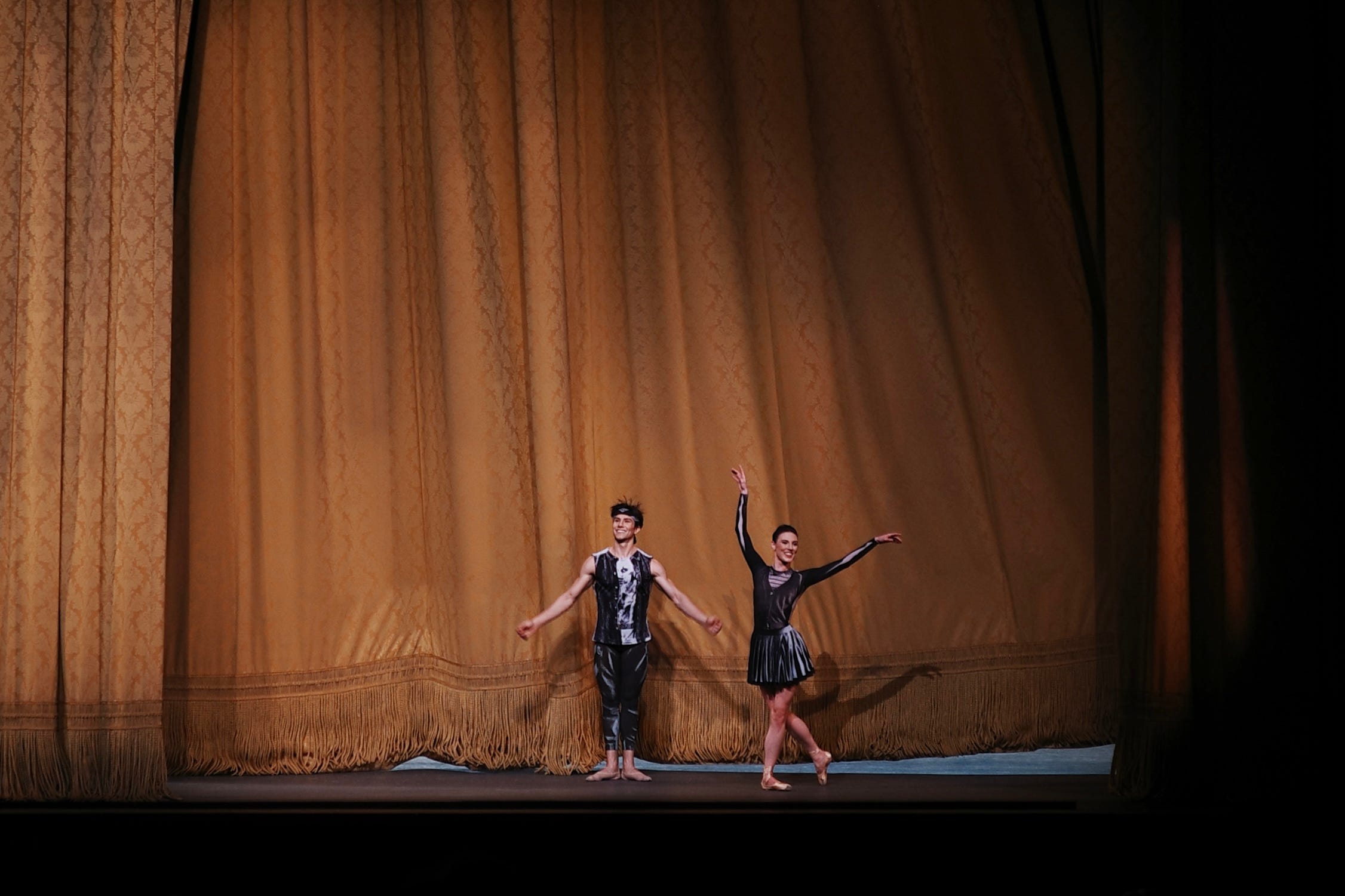
The second piece is also a pas de deux, this one with a very different energy. This Bitter Earth is a soulful and haunting piece choreographed by Christopher Wheeldon. The music is a remix of Max Richter’s On the Nature of Daylight and Dinah Washington’s rendition of Clyde Otis’ This Bitter Earth. Sara Mearns and Tyler Angle is the only cast dancing it this season.
At this stage in their careers, I think this type of work is what really allows Mearns and Angle to shine and showcase their strengths. Mearns has an incredible affinity for dramatic works, especially ones with a tinge of melancholy. Angle was expert in his partnering, as always. Together, they brought a real depth to the piece and I found it moving and meditative. The warm lighting and Dinah Washington’s gorgeous voice sure helped.
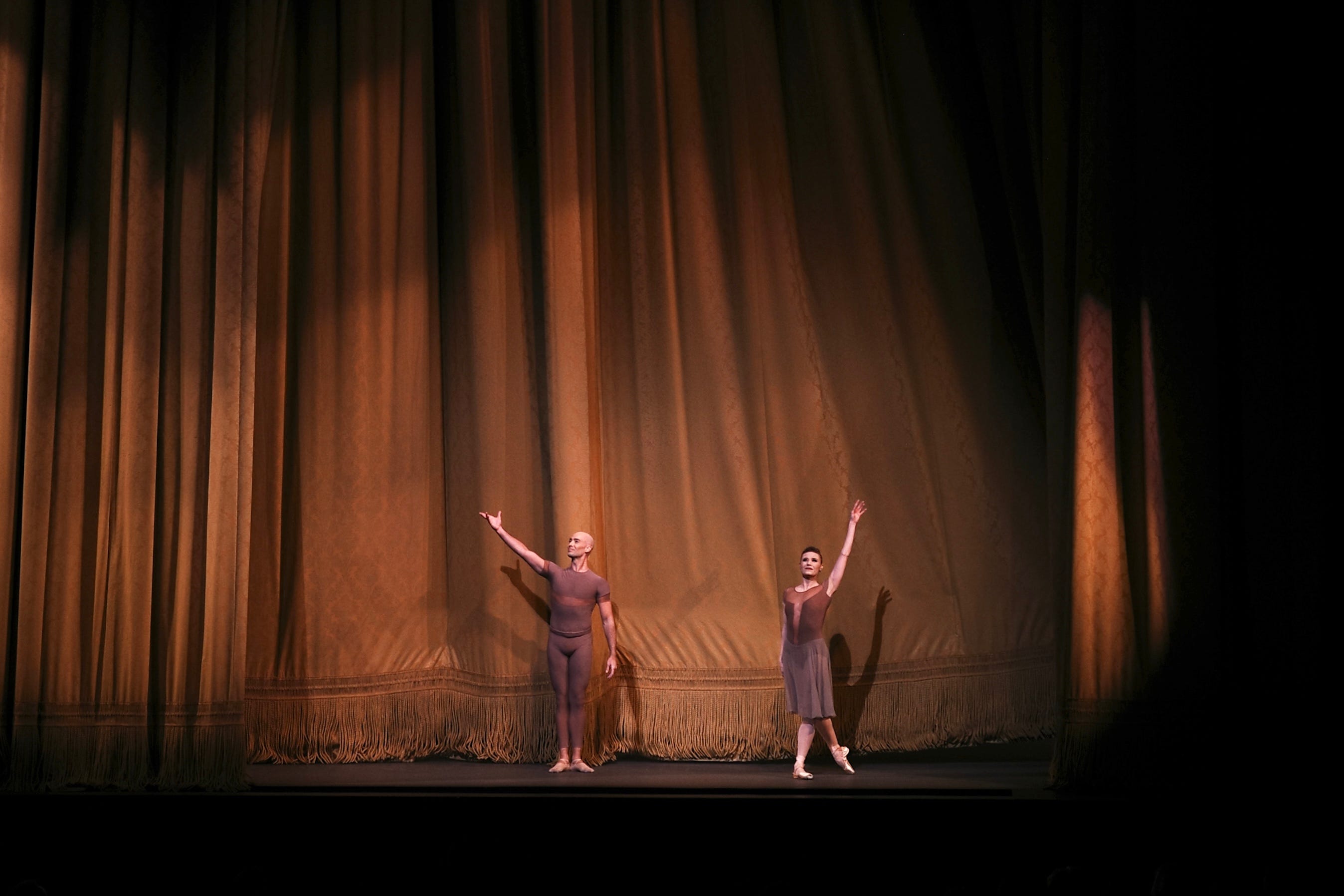
Alexei Ratmansky’s latest work, The Naked King, had been generating a lot of buzz leading up to its premiere. Inspired by The Emperor’s New Clothes, it’s supposed to be a commentary on Trump and the current political climate. I admire Ratmansky’s effort to create political art, but for me, the message of The Naked King fell flat.
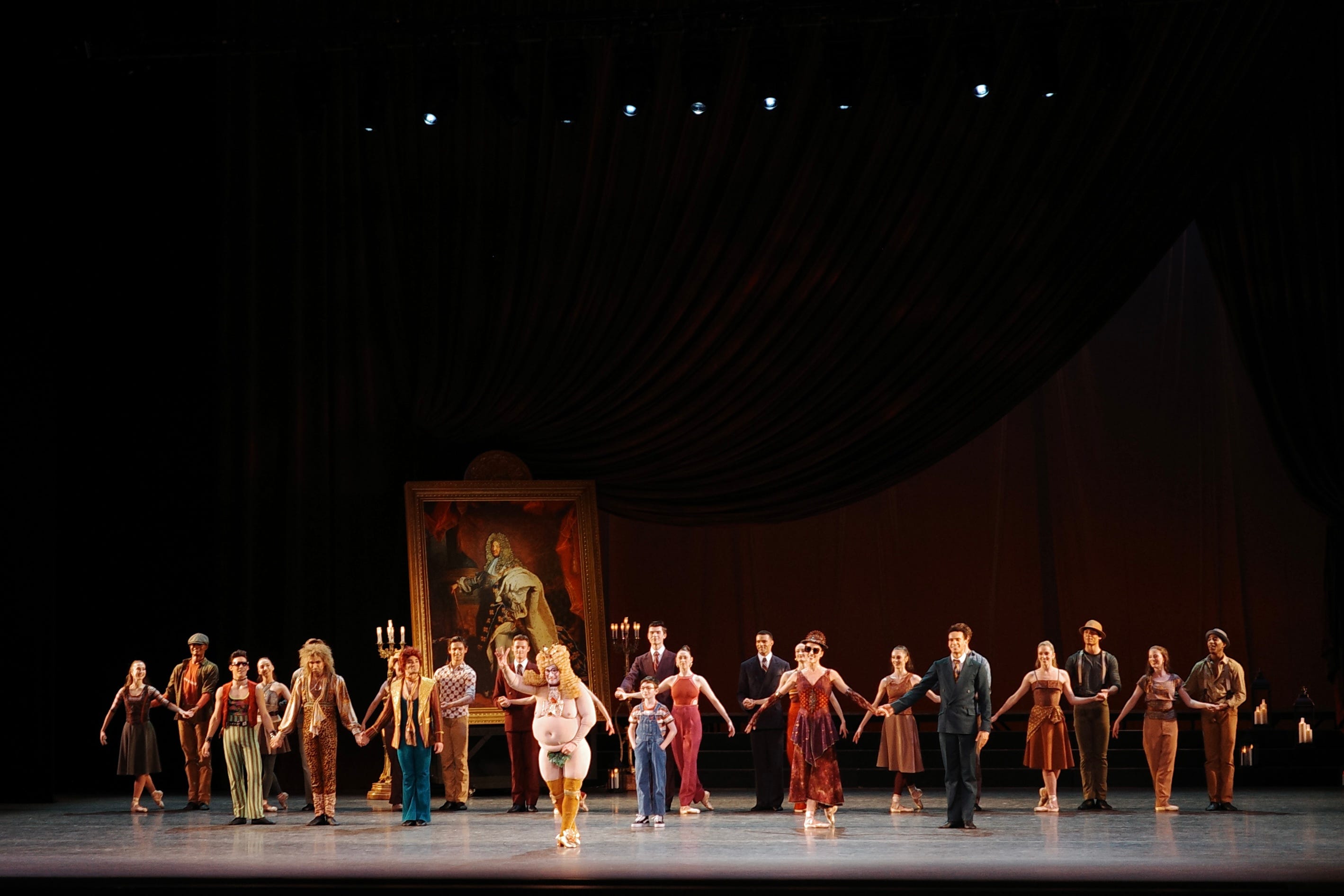
The ballet opened on a promising note. The King is lifted by his henchmen and walked dramatically on their hands, refusing to touch the ground. A portrait of him is unveiled, and he is shown to be absolutely obsessed with his own image. This might’ve been my favorite part of the ballet. I wish we could’ve seen more of the King, and even the Queen, being not-so-great people. I think this would’ve made the conclusion, where he was being humiliated, more effective.
Where The Naked King lost me was the unclear and haphazard storytelling. Without reading the program, I don’t know if it would’ve been clear to me who the swindlers were. Also, why were the commoners constantly hanging out in the palace? How did they get in? The wigs were fun, but why were the costumes all over the place? The King’s portrait and costume were clearly referencing French monarchs, but everyone else (including The Queen) were dressed in a mishmash of 70s/80s fashion. One could argue that it’s purposefully vague and not representative of any single time period, but my eyes were confused. It was like they were trying too hard to be camp. I think if they had done some very simple set changes to show the contrast between the luxurious bubble of the palace and the reality of the outside world, it would’ve made a world of difference.
Regardless, the cast of dancers were terrific. Craig Salstein still has some moves left in him, doing some impressive a la seconde turns in his fat suit. Cainan Weber, Sebastian Villarini-Vélez, and Simeon Neeld were terrific as the swindlers. Emily Kikta was a nonchalant Queen with some flair, and Ryan Tomash is so cute. I think he’s great in humorous roles.
I did come to see it twice, with the same cast, just to see how I liked it the second time around. Maybe my expectations were too high, but it still left me lukewarm the second time. As I was watching it again, it struck me that perhaps I would’ve been more receptive to it if I had first and foremost considered it an adaptation of The Emperor’s New Clothes instead of a contemporary political commentary. This was a little difficult considering a lot of the marketing surrounding the premiere of the ballet revolved around the latter. Ratmansky himself said that he was inspired to create the piece during the “No Kings” march. So, I admit I may have taken this ballet a little too seriously, perhaps waiting for it to say something profound.
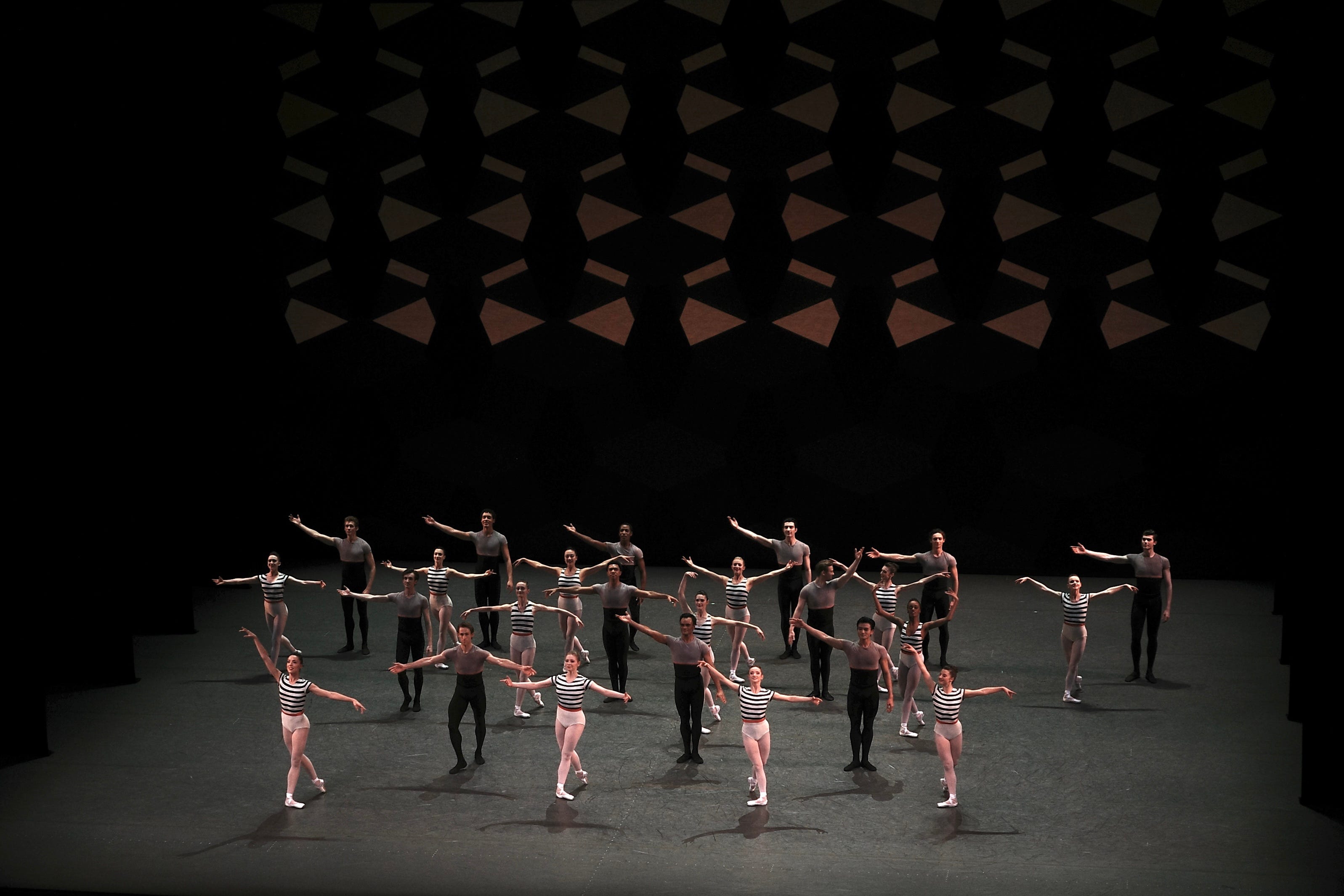
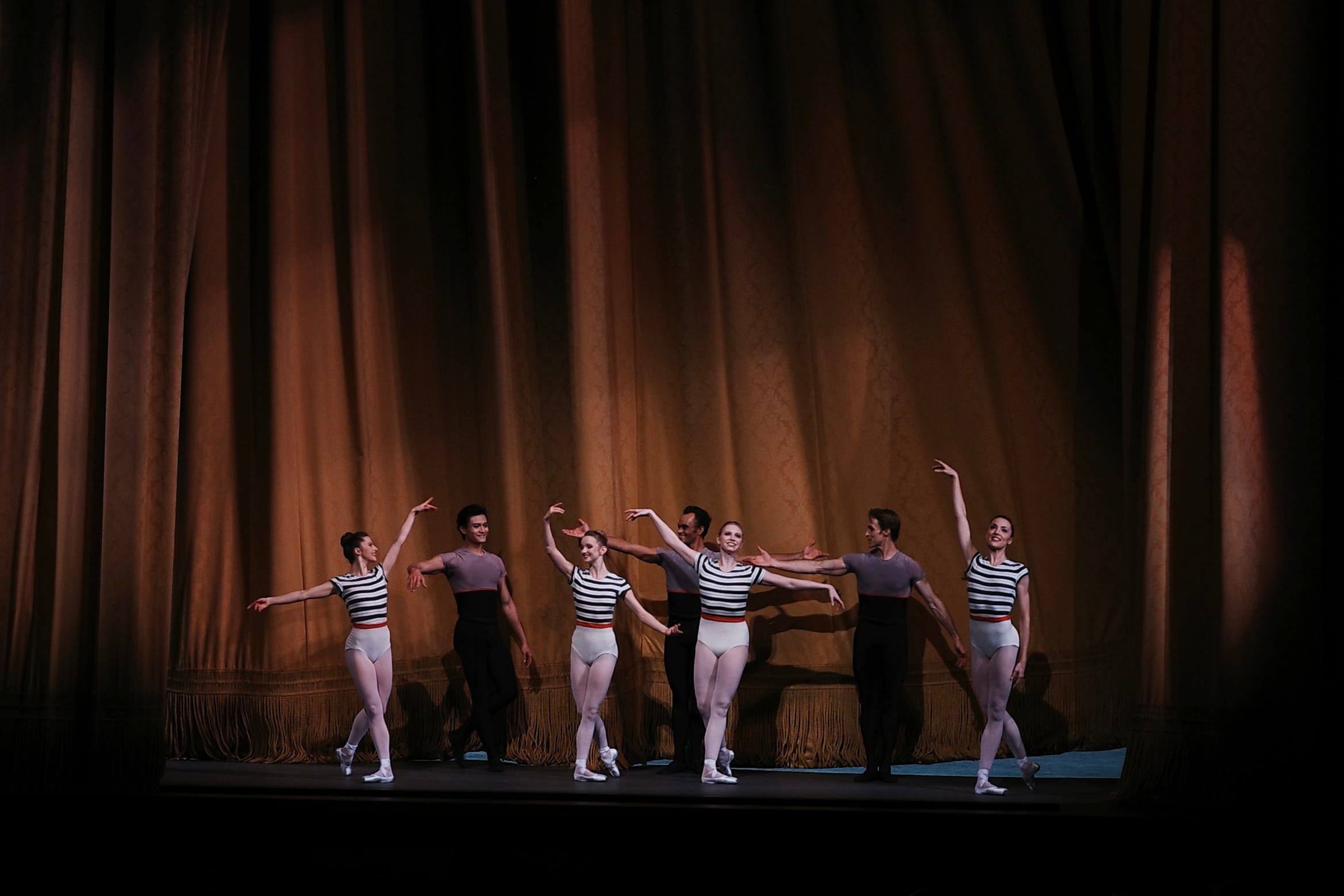
The main reason why I sat through this program a second time was for the last piece, Everywhere We Go. Ever since I saw it for the first time in September 2022, it has been one of my favorite ballets. Choreographed by Justin Peck to commissioned music by Sufjan Stevens, Everywhere We Go is an abstract and plotless piece, but the themes of community are very apparent. There are many ups and downs throughout the ballet, moments of quiet and moments of liveliness. I’ve always seen this ballet as a portrayal of life’s journeys and the people we meet along the way to experience it with.
Emily Kikta was so commanding in her role, lighting up the stage whenever she came on. Dominika Afanasenkov was lovely in her pensive pas de deux with Adrian Danchig-Waring, making lush use of her port de bras. Emma Von Enck was an energetic spinning top in the role originated by Tiler Peck, matched by Taylor Stanley in the Amar Ramasar role.
Indiana Woodward and Chun Wai Chan were delightful in their roles, but every time I watch this ballet, I can only picture Sterling Hyltin and Andrew Veyette. No one, including the beautiful Indiana Woodward, can quite capture the freedom and lightness of Sterling Hyltin in this particular role. I so vividly remember the insane overhead lifts she did with Veyette, and how weightless she was in the “swivels.”
I plan to see the other cast give this ballet a go in the last week. I’m excited to see Tiler Peck reprise her original role (she’s the only dancer from the original cast who’s not retired), and I suspect Mira Nadon will be heavenly in the Maria Kowroski role.
The whole ballet is a rollercoaster of ups and downs. In the final section, “Thanks to the Human Heart by Which We Live”, the ballet ends in a bittersweet way. Every dancer on stage begins to fall, but before they hit the ground, they are caught by another person. Regarding this, Justin Peck stated, “You remember how fleeting life is and how fragile we are (…) I wanted to remind the audience that these are human beings—and they’re all going to die. But no one hits the ground alone.”
In these trying times when I’m feeling particularly bitter and angry at the world, sometimes I feel as though it would be better to live life alone. But things like this remind me that having community and loved ones is a beautiful thing to treasure.